


Typical Dishes of Elba: What They Are and What to Eat
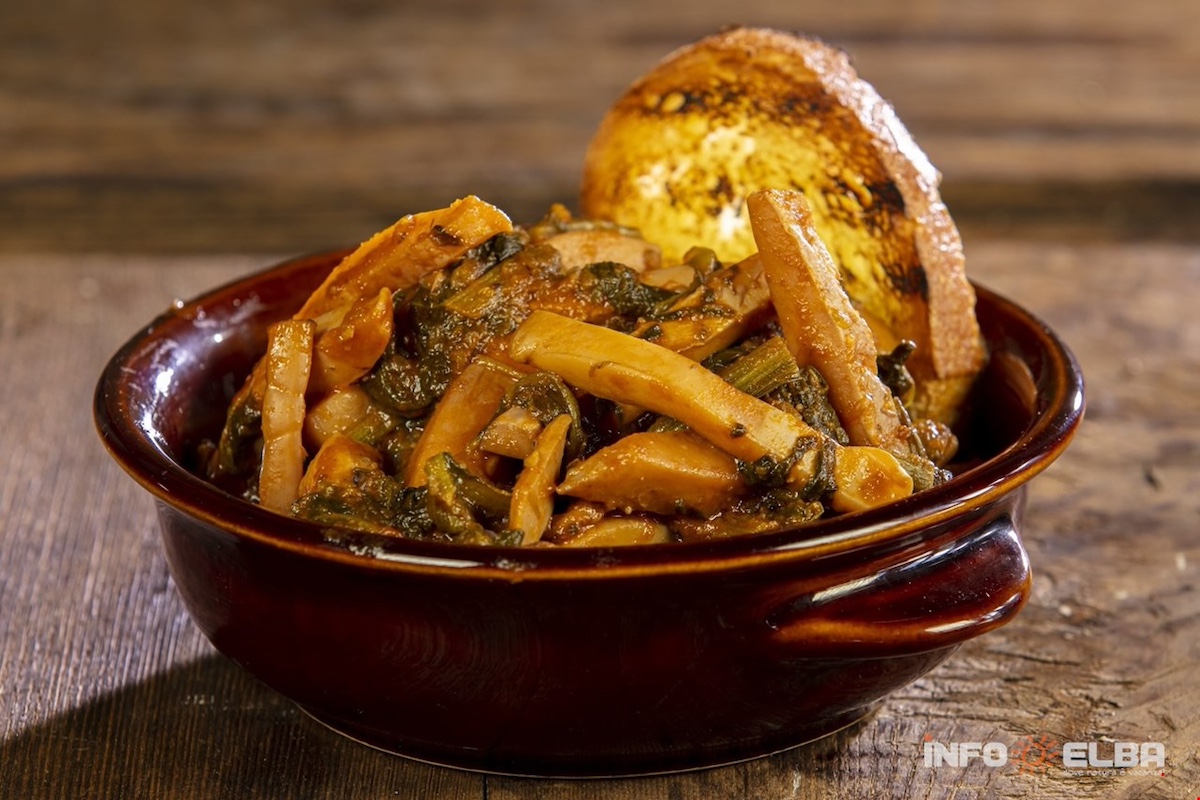
The Island of Elba is not only a paradise of golden beaches and crystal-clear water, but a real treasure chest of authentic flavours. Its cuisine is a direct reflection of its history, its land and life at sea. It is simple, genuine and deeply tied to the fresh ingredients of the land and the sea. Discovering Elba also means a journey of the senses through the typical dishes of Elba, which tell stories of fishermen and farmers. It is an irresistible invitation to explore the island through its rich culinary heritage.
Seafood starters
Palamita in olive oil, Elba’s precious traditional preserve
Palamita in olive oil is much more than a simple starter. It is a real preserving tradition and a direct link with the past of Elban fishermen. This fish, the Atlantic bonito, is similar to tuna but smaller and with more delicate flesh. It was once plentiful in the seas around the island. So as not to waste the catch, fishermen and their families perfected an old recipe to enjoy it out of season too. The palamita is cleaned and cooked in water, vinegar and herbs. Finally, it is preserved in glass jars, covered in good local olive oil.
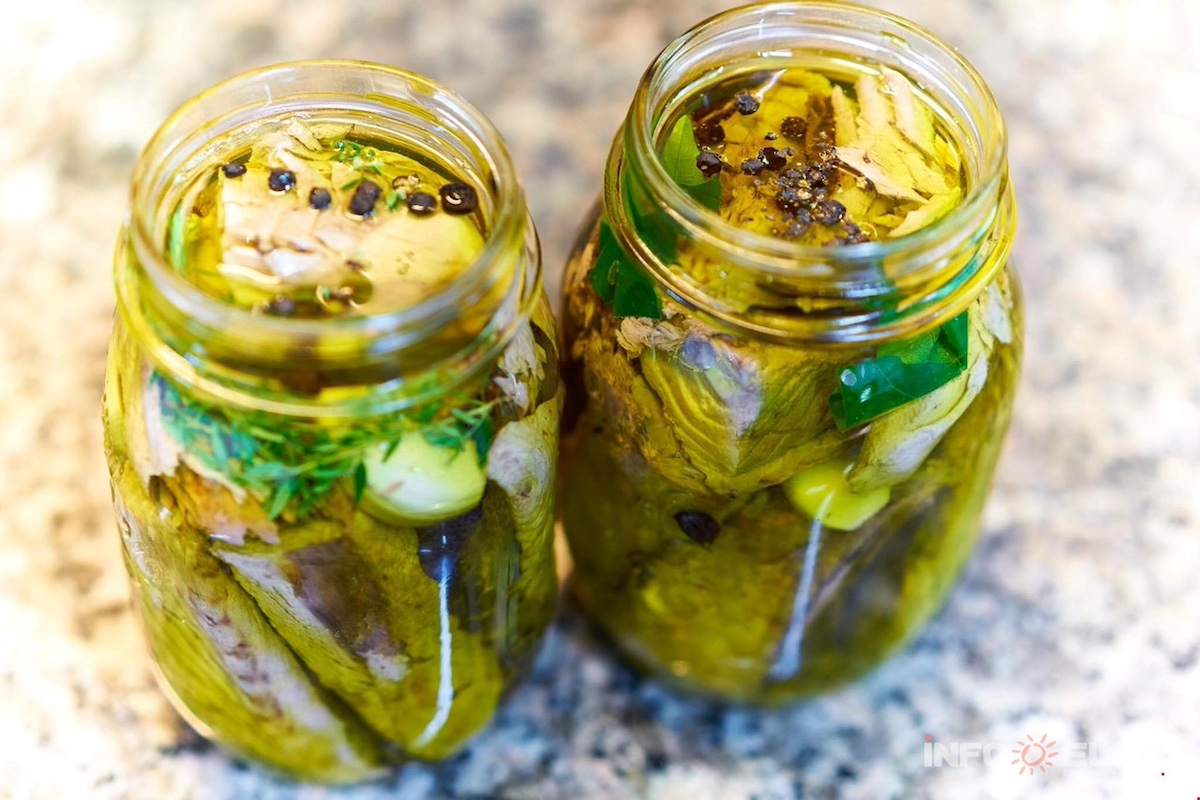
The result is a preserve with a unique, bold flavour that captures the essence of the Elban sea. Today palamita in olive oil is considered a delicacy, and you can easily buy it in the island’s shops and delicatessens, often made by hand. Try it on simple slices of toasted bread as a starter, or with capers and red onion. Every bite tells a story of tradition, simplicity and respect for the resources of the sea.
Stuffed mussels, a wild card that works as a starter or a main course
Muscoli ripieni, or stuffed mussels, perfectly embody the soul of Elban cuisine. They are a skilful blend of simple ingredients and an extraordinarily rich flavour. This versatile dish is a real “wild card” at the table. It is perfect as a starter or, in more generous portions, as a tasty seafood main course.
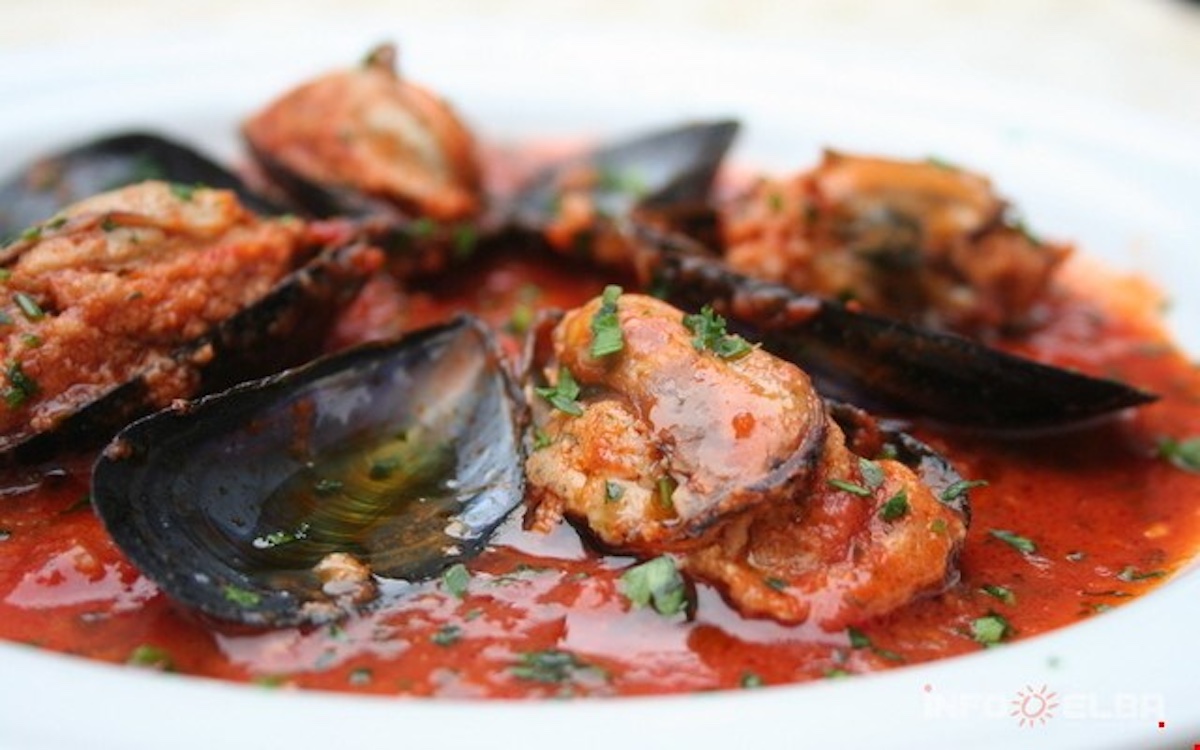
The recipe has its roots in the seafaring tradition and the “cucina povera” (peasant cooking) of the island. Here people learned to make the most of every resource of the sea. The secret lies in the stuffing: a triumph of flavours that turns a humble shellfish into a real treat. A tasty filling goes inside the mussels, made with simple, genuine ingredients. These are breadcrumbs, garlic, parsley, cheese and an egg to bind everything together. Sometimes the chopped meat of the mussels is added too. Once stuffed, the mussels are cooked slowly in a tomato sauce, which brings out their flavour and makes them irresistible. The result is a dish that speaks of the sea, tradition and passion, a timeless classic that every visitor should try.
Elban-style octopus, a humble traditional dish
Polpo all’elbana, Elban-style octopus, is one of the most representative dishes of the seafaring tradition of the Island of Elba. This is a perfect example of the local “cucina povera”. Born from the need to make the most of every resource, it created recipes full of flavour. The dish tells the story of an island where fishermen turned their daily catch into a simple meal. It is rich in taste and captures the essence of the sea.
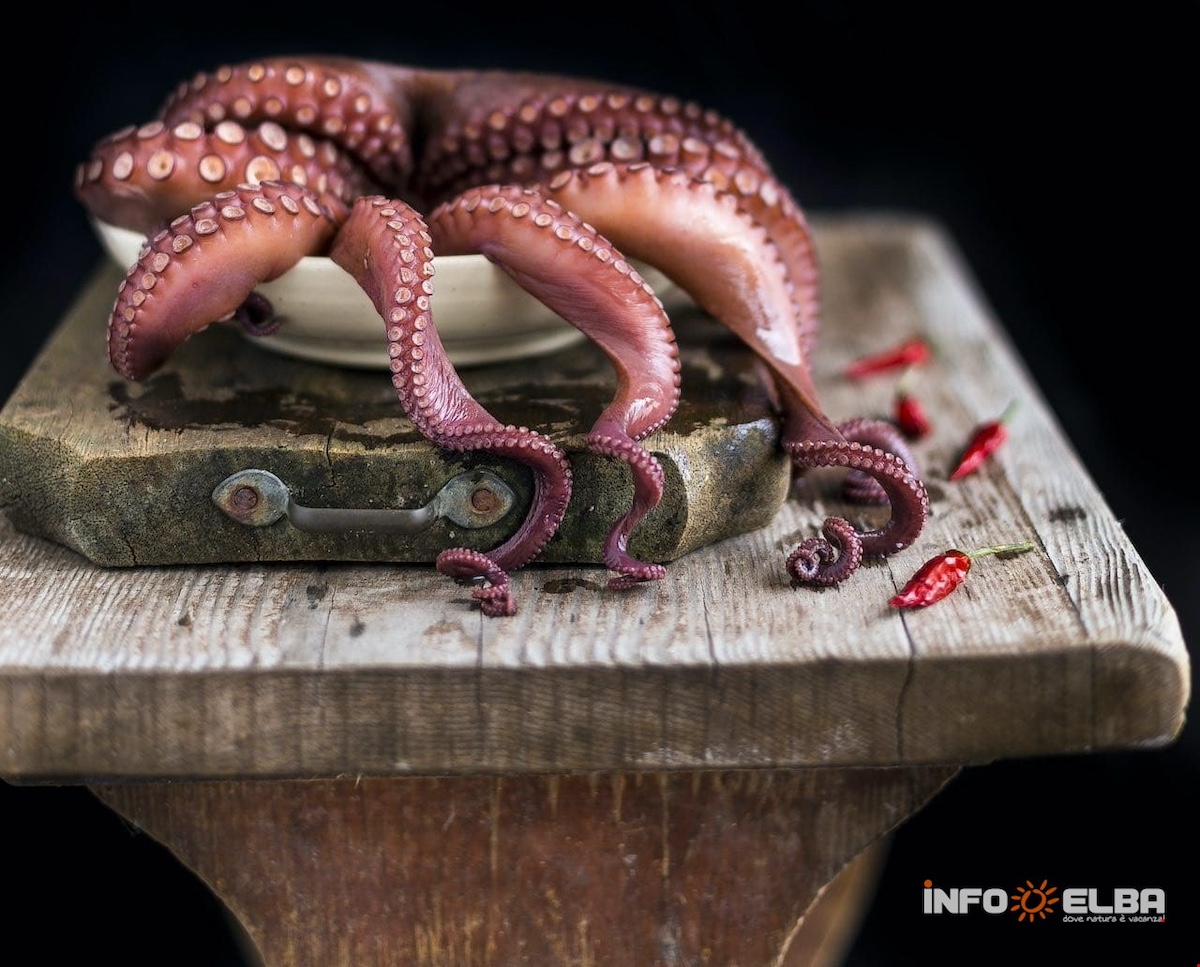
It is simple to prepare, but it requires patience and care. The fresh octopus is first left in the freezer overnight, an old trick to tenderise the flesh. Next, it is cooked gently and cut into small pieces. It is served very simply, usually with a generous drizzle of Elban extra virgin olive oil and lemon juice. The original recipe has no other ingredients, so that the natural flavour of the octopus stands out. It is considered an excellent main course, but its freshness and lightness also make it perfect as a starter in a seafood menu.
Sburrita di baccalà, the miners’ meal
Sburrita di baccalà holds one of the most fascinating and least known stories of the Island of Elba. It is linked in particular to the mining tradition of Rio Marina. Miners’ wives prepared this hearty meal for their husbands. It was a humble dish but full of energy, perfect for the hard work in the mines. The recipe is an example of how necessity is the mother of invention, turning simple ingredients into a real delight.
This brothy dish is made with desalted salt cod. It is cooked with garlic, chilli and the fragrant wild nipitella (lesser calamint), typical of Elba’s Mediterranean scrub. Everything is poured over slices of stale Tuscan bread, which soaks up the tasty broth, creating an irresistible combination of flavours and textures. Usually served hot, sburrita can be enjoyed as a rich starter or, in larger portions, as a real main course. It offers an authentic and historic taste of the true Elba.
First courses of Elban cuisine
Spaghetti alla Margherita (or alla Riese)
Spaghetti alla Margherita are also known as spaghetti “alla Riese”, from the town of Rio. This first course celebrates the generosity and seafaring tradition of Elba. The name “Margherita” does not refer to the flower but to the spider crab. This prized crab has a reddish shell and delicate meat, and in the local dialect it was called “margherita”. This dish tells the story of a cuisine that knows how to make the most of the treasures of the sea.
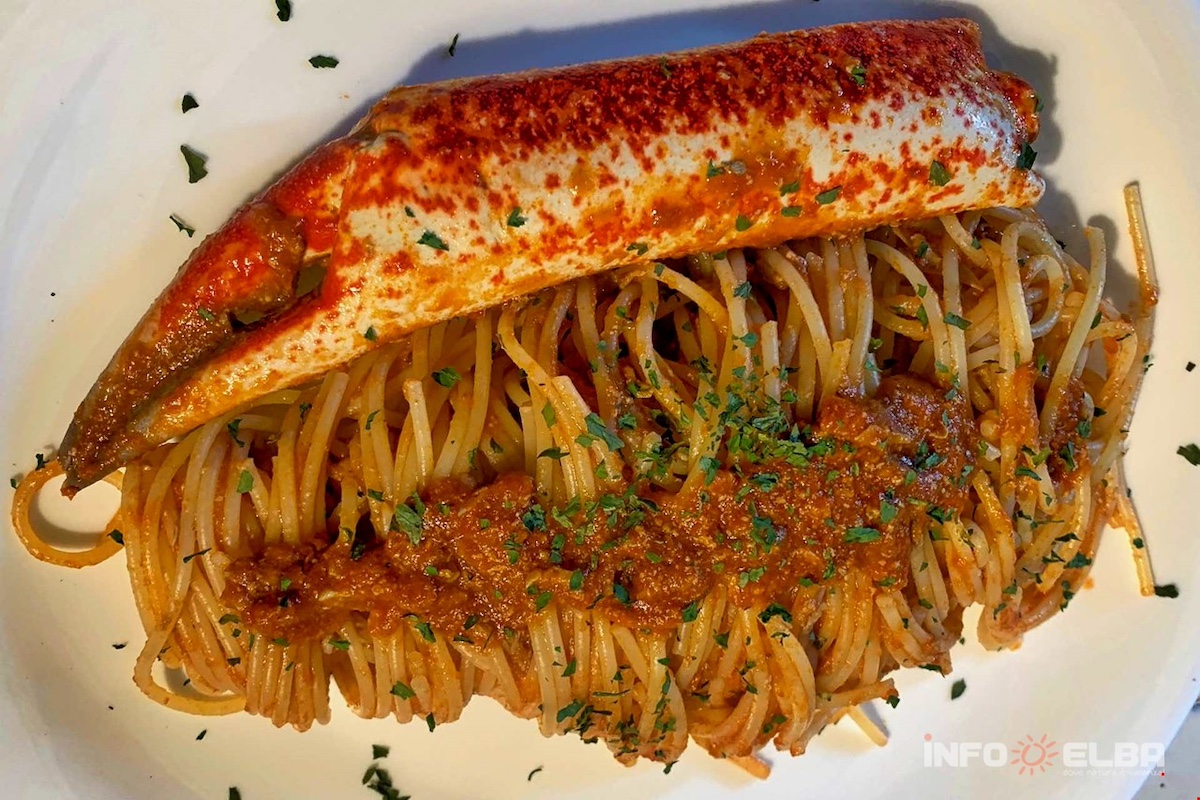
The recipe is a celebration of simplicity. The sauce is made with fresh tomato, garlic, parsley, chilli and, of course, the spider crab. After browning the crab with the herbs, a splash of white wine is added and everything is cooked slowly with tomato passata. The result is a thick, fragrant sauce that coats the spaghetti and brings out the unique, delicate flavour of the spider crab. You can enjoy it in the island’s most authentic restaurants. It is a real culinary experience with a taste of history and the sea.
The famous Penne in Barca by Elbano Benassi, a cook from Portoferraio and post-war mayor
Penne in Barca (“penne in a boat”) are a first course with a fascinating story, closely tied to the Island of Elba. The recipe was created by Elbano Benassi, a cook from Portoferraio. He was also the first communist mayor after the war and a pioneer of tourism on Elba. His trattoria “Da Elbano” was a point of reference, and his creativity led him to skilfully combine popular tradition with innovative touches.
This dish is an expression of the most genuine seafood cooking. It is made with a delicious sauce of fresh clams, garlic, parsley and chilli, deglazed with white wine. The distinctive touch, which makes the dish creamy and unique, is a velvety sauce. Originally it was a mixture of clam water and flour. Today it is often replaced by a light béchamel or cream, enriched with egg yolks. Everything is quickly tossed with the penne, creating a dish that tastes of the sea and of history. It is a real tribute to one of the most eclectic and visionary figures of the Island of Elba.
Bordatino, Elba’s typical soup
Bordatino is a soup that tells a story of migration and ingenuity. It does not come from the sea but from the land and the mountains. Its recipe was brought to Elba by woodcutters and labourers from the Tuscan-Emilian Apennines. They came to work on the island during the winter months. These workers, with their pockets full of cornmeal and dried beans, created a hot, hearty meal, perfect for facing their daily toil.
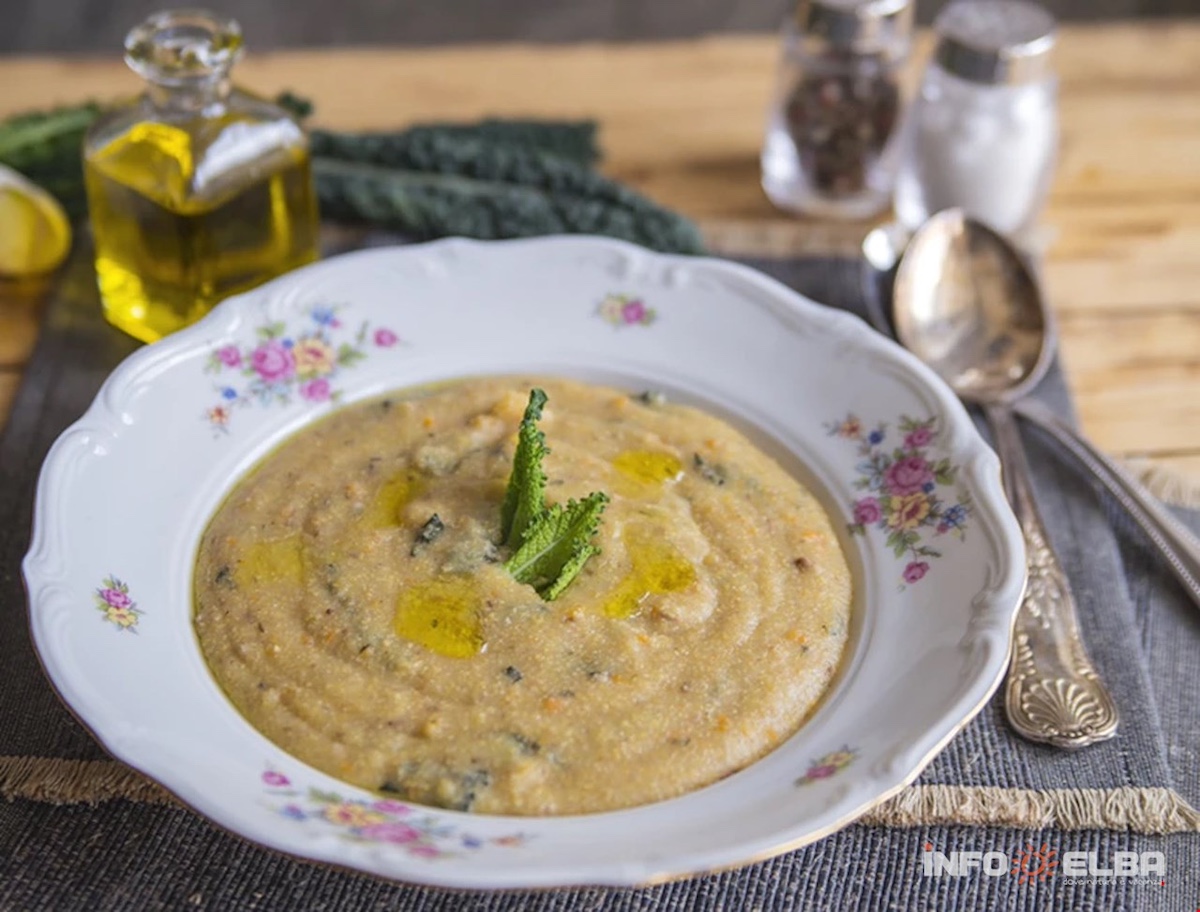
The name “bordatino” is said to come from the typical edge, or “bordo”, that forms on the soup when it is served in the bowl. It is a vegetable-based recipe, especially with cavolo nero (black kale), to which beans and precious maize flour are added. Everything is cooked slowly until it becomes a thick, nourishing soup, usually served with a drizzle of raw olive oil and sometimes with croutons. It is a dish that warms body and soul, a culinary heritage that blends the flavours of the Elban land with the Tuscan farming tradition.
Typical main courses of the Island of Elba
Elban cacciucco: why is it different from the Livorno version?
Cacciucco, the famous fish soup, is a pillar of Tuscan culinary tradition. However, its Elban version is clearly different from the more famous one from Livorno. Even so, it shares the same humble roots and deep bond with the sea. The main difference lies in the ingredients. Elban cacciucco is considered simpler and more “humble”, because it leaves out moray eel, weever and conger eel, which are used in Livorno.
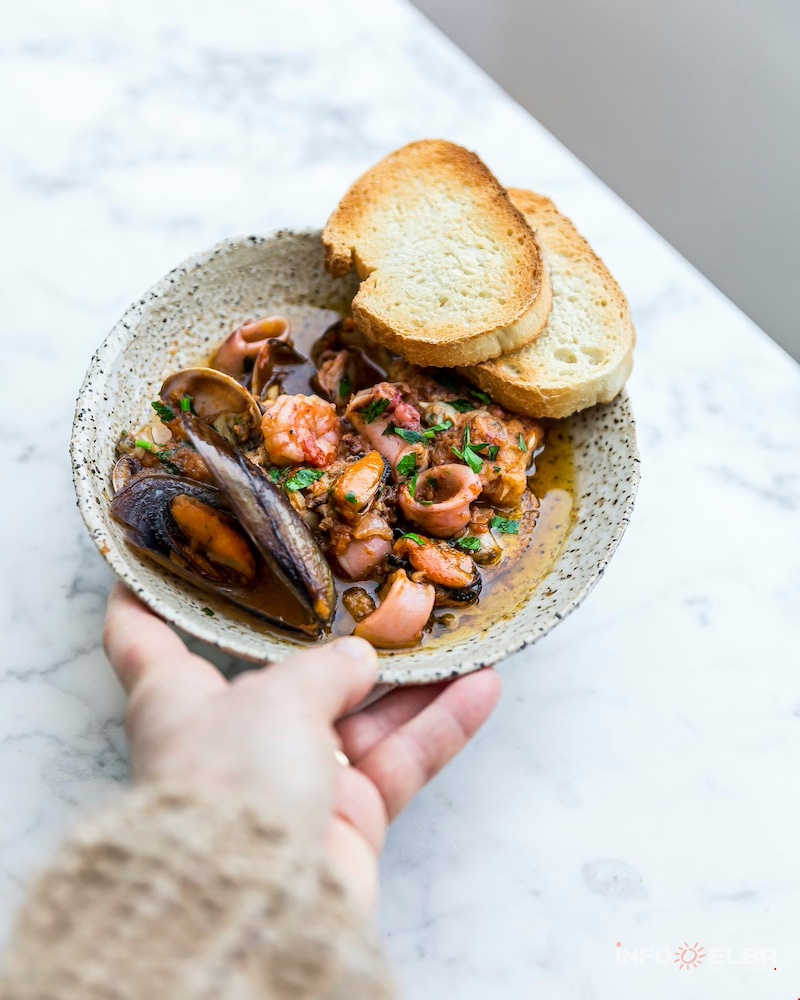
Making it requires patience and precision, because it is not a simple soup but a complex dish. In the Elban recipe, the fish stock is made separately with scorpionfish, gurnard and other rock fish. Each ingredient is then cooked carefully. Octopus and cuttlefish cook for a long time, and the more delicate fish are added later. The mussels go in only at the end, so that they do not fall apart. The result is a soup rich in flavours and aromas, with a pleasant spicy note, traditionally served on slices of toasted bread. Despite its simplicity, it shows the skill of Elban fishermen in turning the catch of the day into a unique delicacy.
Stoccafisso alla riese, a recipe of Spanish origin
Stoccafisso alla riese, Rio-style stockfish, tells a story of cultural influences and distant traditions. Its roots lie in the Spanish rule over the Island of Elba. It is said that the Spaniards stationed at Forte San Giacomo, in today’s Porto Azzurro, brought the recipe to the island. Here it became a typical dish of Rio nell’Elba. Stockfish was once eaten on days of abstinence or during popular festivals. It became a symbol of conviviality, the star of “ribotte” (feasts) and “spiaggiate” (beach gatherings) with wine and songs.
The dish combines simple ingredients with a rich and tasty preparation. The stockfish, after soaking, is cooked slowly in a red sauce of onion, tomato paste, black olives, pine nuts and capers. A splash of white wine and some chilli bring out the flavour even more. Potatoes, added halfway through cooking, soak up the sauce and make the dish even heartier. This recipe celebrates the meeting of Mediterranean tradition and historical influences. Its unique, enveloping taste invites you to discover the island’s past.
Elban panzanella, perfect for summer
Elban panzanella, also known locally as “capponata”, is the essence of the island’s summer cooking. It is a fresh, tasty and practical dish that combines the tradition of reusing food with Mediterranean flavours. Its origins are very old and linked to the Grand Duchy’s navy. In particular, it comes from the “cappon di galera”, made with ship’s biscuits or “pan di munizione” (ration bread) issued to sailors. The bread was used to make a filling meal that would keep for a long time.
Today Elban panzanella is a rich and tasty summer salad. To make it, stale bread is softened in water and then mixed with a variety of fresh ingredients: tomatoes, spring onions, cucumbers, capers and olives. The distinctive and deeply Elban touch is salted tonnina (a lean cut of tuna) with anchovies. They give the dish a unique savoury flavour and a direct link with the sea. Dressed with extra virgin olive oil, marjoram and basil, it is ideal for a light lunch on the beach or a “spiaggiata” with friends. It is a true symbol of the Elban summer.
Salt cod with chickpeas, a dish eaten mainly on Fridays
Baccalà con i ceci, salt cod with chickpeas, captures the essence of Elba’s food tradition. It is especially linked to religious customs and “lean” cooking. As tradition has it, it was the typical Friday dish, when fish was eaten instead of meat. It was a complete, nourishing and tasty meal. The recipe shows an old wisdom in combining humble but flavourful ingredients. Salt cod and chickpeas create a dish that filled and satisfied.
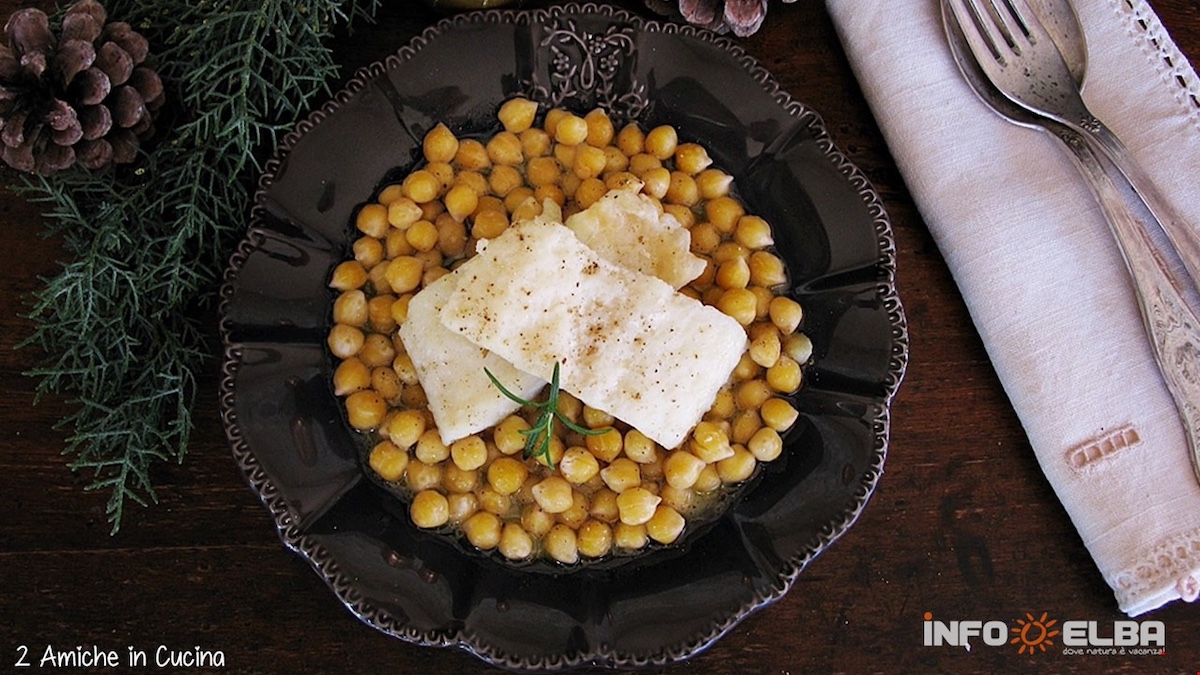
The salt cod, soaked and desalted beforehand, is cooked slowly with a base of garlic, rosemary and a touch of tomato. The chickpeas, also cooked beforehand, are added to the cod, and everything is left to absorb the flavours to create a thick, comforting stew. It is a dish that warms the heart and, despite its simplicity, offers an explosion of flavours. Enjoyed with a drizzle of raw olive oil and croutons, it is a true journey through time and the traditions of the Island of Elba.
Typical Elban desserts to try at least once
Chestnut pudding, a dish that speaks of the land
Chestnut pudding is a dessert with a deep story, linked to the mountainous land of the Island of Elba and its “chestnut civilisation”. The slopes of Monte Capanne, especially around Marciana and Poggio, have always been covered in thick chestnut woods. For centuries they were a precious resource for the local population. Chestnuts were not only eaten fresh but also dried to make a sweet flour. This was the base of hearty dishes such as “polenta dolce”, a real substitute for bread in times of poverty.
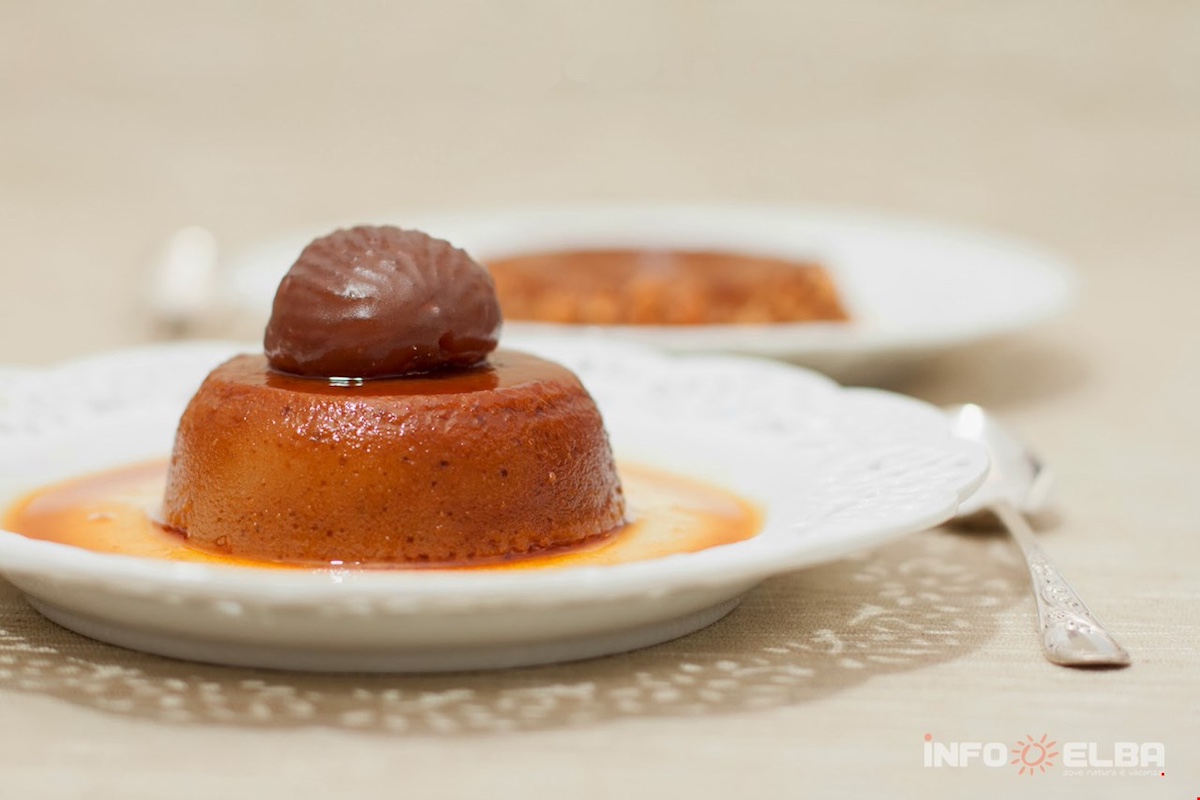
So this pudding is not just a simple dessert, but a celebration of this tradition. The recipe involves making a thick, fragrant cream from boiled and puréed chestnuts. Milk, sugar and eggs are added, often with cocoa, rum or candied fruit. The result is a dessert with a rustic, enveloping flavour and a scent of woods and history. It celebrates the unbreakable bond between the island and its mountain, offering a sweet and authentic end to any meal.
Sailor’s bread, or fisherman’s bread
Pane del marinaio, sailor’s bread or fisherman’s bread, bears witness to Elba’s old sea routes. It also recalls the lively trade the island has had over the centuries. The recipe was not born on the island but is part of the Genoese tradition. It was then adapted in an Elban version thanks to close contacts and sea trade with the Ligurians. Sailors and fishermen took this bread with them on long voyages. It was a filling, high-energy food, and its key feature was that it kept for a long time.
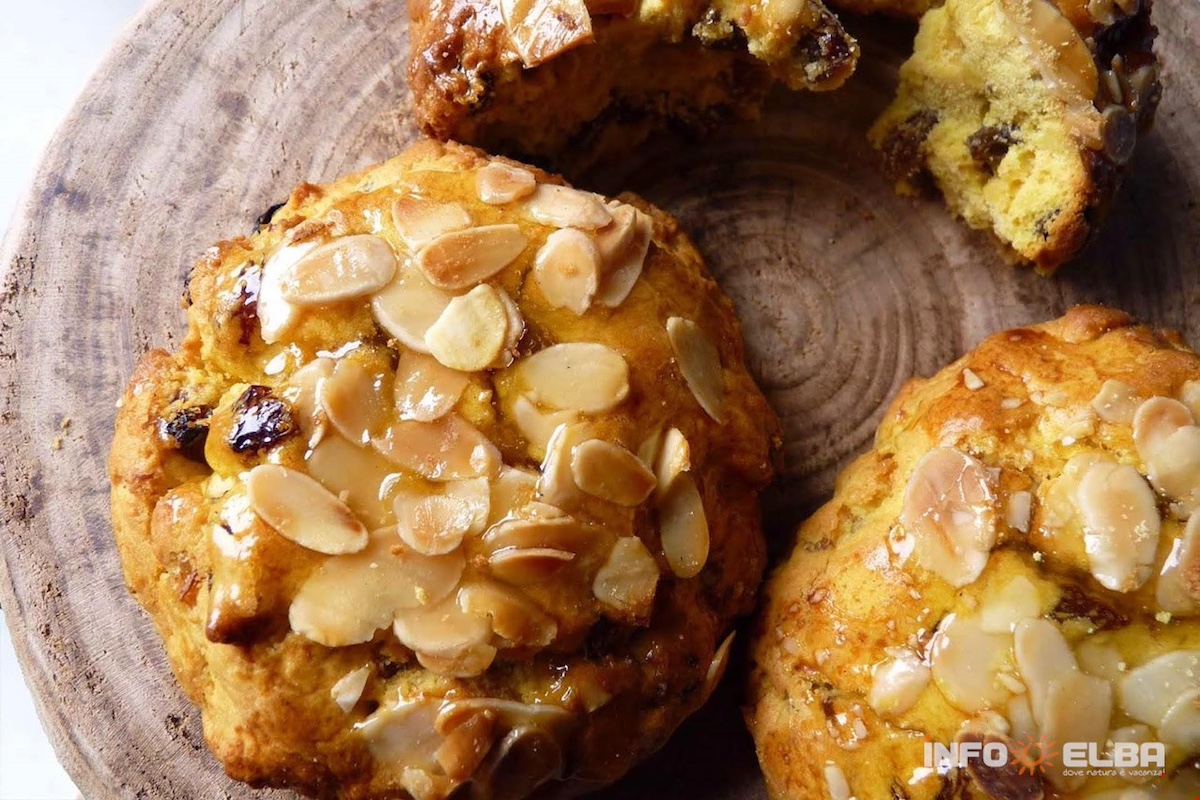
It is a sweet bread with a dry, lightly leavened dough, enriched with simple but energy-rich ingredients: raisins, pine nuts, candied orange peel and citron. These ingredients not only make it tasty but also help it last longer. Despite its humble origins, sailor’s bread has become a real delicacy of the island. It is often served as a dessert with a good sweet wine such as Elba Aleatico Passito. It is a dessert full of stories of the sea and faraway lands, and today a symbol of Elba’s culinary tradition.
Schiacciunta, a typical dessert of Poggio and Marciana
Schiacciunta is a dessert with the rustic, authentic flavour of Elba’s mountain villages, especially Poggio and Marciana. Its recipe is linked to the island’s farming and mountain tradition. It clearly shows the influence of the woodcutters and charcoal burners who came to the island to work. The distinctive ingredient of this biscuit-like cake is pork lard, which was once a precious source of energy and a typical ingredient of mountain cooking.
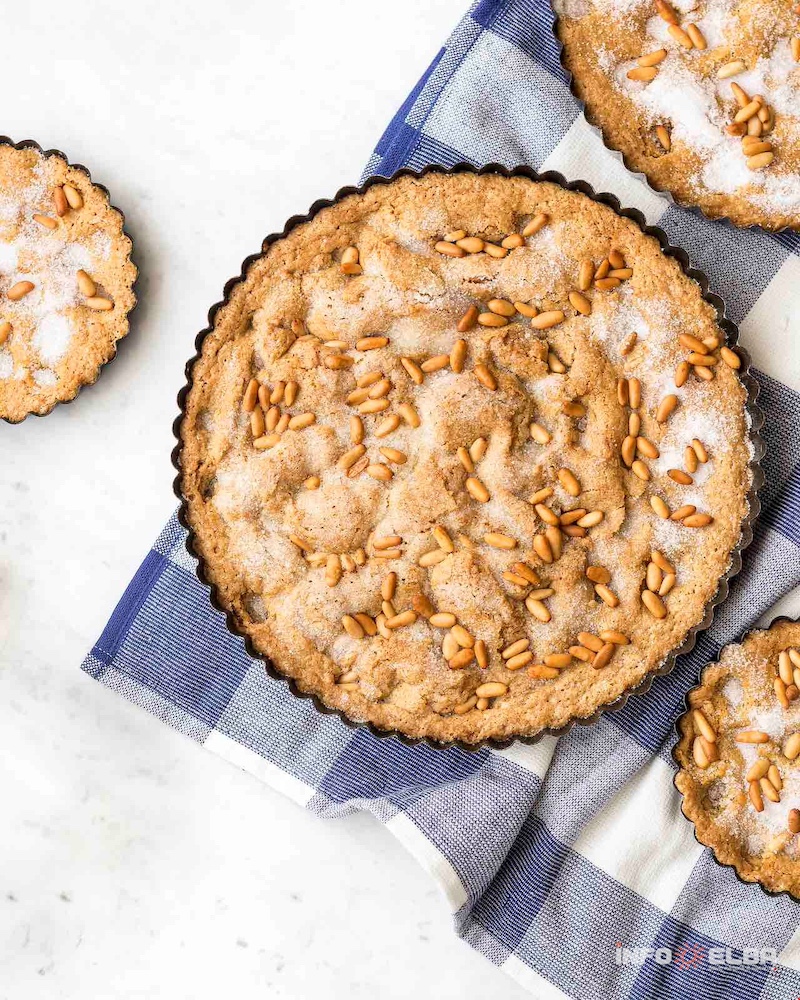
It is simple to make at home: a dough of flour, eggs, sugar and lard, flavoured with lemon zest. The dough is worked until smooth and even, then spread in a baking tin. Tradition in Poggio is to decorate the surface with small pressed circles, a handmade touch that makes every schiacciunta unique. The result is a soft and crumbly cake, perfect after a meal or as an afternoon snack, perhaps with a good sweet wine. Schiacciunta is not just a dessert but a piece of history, a bridge between mountain tradition and the authentic flavours of the Island of Elba.
Corollo, a traditional Elban cake
Corollo is a cake rooted in one of the sweetest and most romantic traditions of the Island of Elba. Its origin is linked to the “maggio” festival in Campo, when the village boys sang songs to the unmarried girls. The next morning, the girls thanked them with this very cake. Over time, corollo lost its romantic meaning and became a symbol of friendliness and celebration. Today it is exchanged among family and friends at Christmas and Easter.
It is a cake that is simple to make but requires care. Similar to a ring cake, it has a soft and fragrant dough. The basic ingredients are flour, eggs, sugar and butter. A touch of anise liqueur and lemon zest gives it a unique and unmistakable aroma. The dough is worked for a long time, baked and, once cool, dusted with icing sugar. There is also a simpler version, typical of Marciana Marina, which uses oil instead of butter. Corollo is the perfect example of how a cake can tell stories and keep a people’s traditions alive.
Hotel Anna’s restaurants: the excellence of the island’s ingredients
The culinary experience at Hotel Anna is a journey through the authentic and genuine flavours of Elba. Our guests can enjoy two different spaces, each with its own character, but united by a constant search for excellent ingredients.
Every day starts with a generous buffet breakfast. In the evening, the Canaletto & The Terrace restaurant welcomes you on its charming terrace surrounded by greenery. It serves traditional and reinterpreted Elban cuisine, with dishes from sea and land and local produce.
For a light lunch or an aperitif at the end of the day, there is the Sottovoce Lounge & Lunch Bar. Its à la carte menu is designed to go with your days at the sea.
We invite you to stay at Hotel Anna to discover the island through its authentic flavours too, enjoying a high-quality culinary experience. Find out more about our restaurants in Elba!
Frequently asked questions about the typical dishes of Elba
What is the most famous typical dish of Elba?
One of the best known is Elban cacciucco, a fish soup. It is simpler than the Livorno version because it leaves out moray eel, weever and conger eel. Stoccafisso alla riese, spaghetti alla Margherita with spider crab and palamita in olive oil are also very typical.
What is the difference between Elban and Livorno cacciucco?
The Elban version is considered more essential: it does not include moray eel, weever and conger eel. The fish stock is made separately with scorpionfish, gurnard and other rock fish, and the mussels are added only at the end.
Which desserts should I try on Elba?
Try chestnut pudding, sailor’s bread with Elba Aleatico Passito and schiacciunta from Poggio and Marciana. Don’t miss corollo, the ring cake linked to the “maggio” festival in Campo.
Can I taste Elban cuisine at Hotel Anna?
Yes. In the evening the Canaletto & The Terrace restaurant serves traditional and reinterpreted Elban cuisine. You can enjoy dishes from both sea and land on a terrace surrounded by greenery. Booking is required.
Where can I buy palamita in olive oil?
You can easily find it in the island’s shops and delicatessens, often made by hand. It is perfect on toasted bread or with capers and red onion.